
What is Condensed Milk?

If you’ve ever tasted Vietnamese coffee — that thick, sweet, caramel-like blend of strong coffee and creamy sweetness — you’ve already met condensed milk. It’s one of the core ingredients that define Vietnam’s coffee culture, and once you understand why, it all makes sense.
What Condensed Milk Actually Is
Sweetened condensed milk is simply cow’s milk with most of the water removed and sugar added. The result is dense, glossy, and shelf-stable — a can of milk that doesn’t spoil in the heat.
In Vietnamese, it’s called “sữa đặc có đường,” which literally means “condensed milk with sugar.” Don’t confuse it with evaporated milk (which has no sugar) or coffee creamers and non-dairy substitutes — those are usually made from vegetable fats and taste completely different.

Why Vietnam Uses It
The story starts in the late 1800s, when Vietnam was under French colonial rule. The French brought coffee plants and their café-au-lait habits — but fresh milk was nearly impossible to find or keep in the tropical climate.
Condensed milk turned out to be the perfect solution: it lasted for months without refrigeration and traveled well. Over time, its flavor became part of the drink itself, not just a replacement. That’s how cà phê sữa đá, the iconic Vietnamese iced coffee with condensed milk, was born — and eventually became a cultural symbol.
What It Does in the Cup
Condensed milk transforms Vietnamese coffee into something uniquely balanced. It softens the rough edges of robusta, evens out the low acidity, and replaces bitterness with a sweet finish. The sugar brings warmth; the milk adds body. Together they turn the coffee into something thicker and smoother.
When brewed the traditional way (hot coffee dripping through a phin directly onto condensed milk), the sugar melts instantly, creating a uniform texture with no syrupy “sweet layer” at the bottom. And even when poured over ice, the flavor doesn’t get lost: it stays rich and cohesive.
Choosing the Right Can
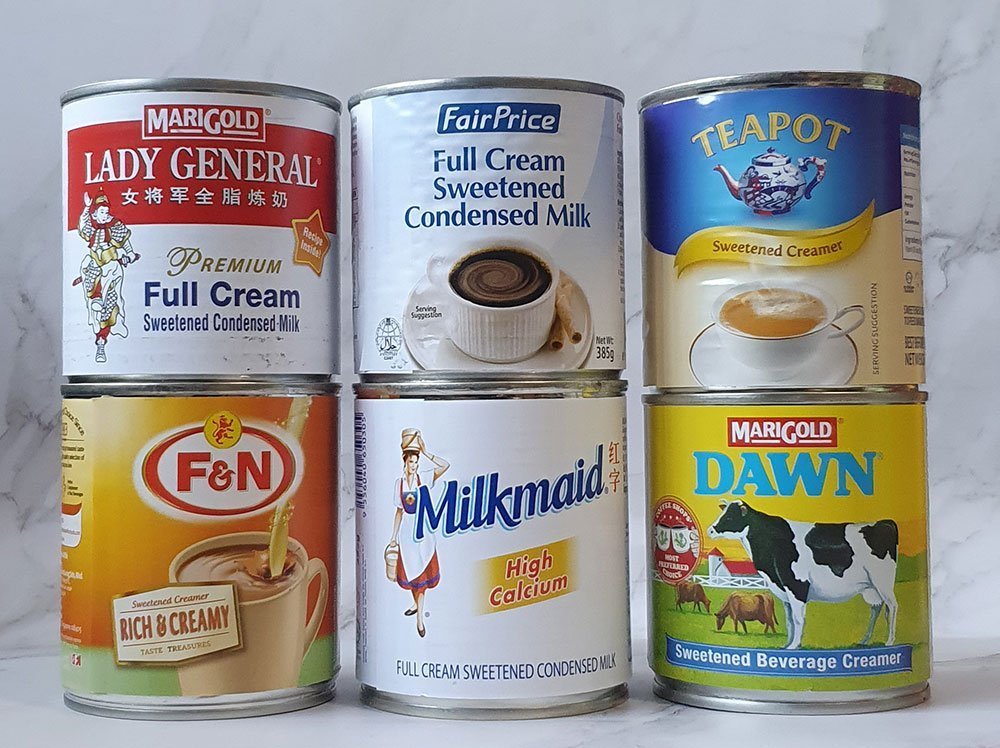
Not all condensed milk is created equal. Always check the ingredients: milk and sugar should be at the top of the list — nothing else. Avoid “sữa đặc” made with vegetable fats or non-dairy creamers, they look similar but taste flat and waxy.
There are alternatives like coconut condensed milk for vegan or lactose-free versions — good in their own way, but they shift the flavor toward something tropical and dessert-like.
Once opened, transfer the milk to a clean jar and store it in the fridge, unopened cans are fine in a cool cupboard for months.
How Much To Use
If you’re brewing with a phin, start with about 1–2 tablespoons (15–30 g) for every 100–120 ml of coffee. For iced versions, you may need slightly more — around 1.5-2.5 tablespoons, since melting ice dilutes the sweetness.
The right balance is when the drink tastes full and rounded, not sugary. You should still taste the coffee clearly, with the sweetness sitting in the background rather than taking over. Check our guide: How To Make Vietnamese Iced coffee for a deeper look.
FAQ
1. Condensed vs. evaporated milk?
Condensed milk has sugar; evaporated milk doesn’t. Vietnamese coffee always uses the sweetened one.
2. Can I make it at home?
You can simmer milk with sugar until it thickens, but it won’t taste exactly the same — industrial versions caramelize differently.
3. Will it curdle in hot coffee?
No. The sugar and fat content stabilize it, even under heat.
4. Does it work with arabica?
Yes, but the result will be lighter and softer. Robusta blends create a stronger contrast and hold up better.
5. How long does it last?
Unopened — several months. Once opened — keep in the fridge and use within a reasonable time.
